
 Bengisu Kubaşık
 Introduction
The containment of a core material inside of a small capsule is called microencapsulation. A polymeric material coates liquid or solid substances to protect polymeric material from circumambient area1. Microcapsules size vary between 50 nm to 2 mm2. Microcapsule’s size and structure differs according to core material being solid, liquid or gas as in figure 12.
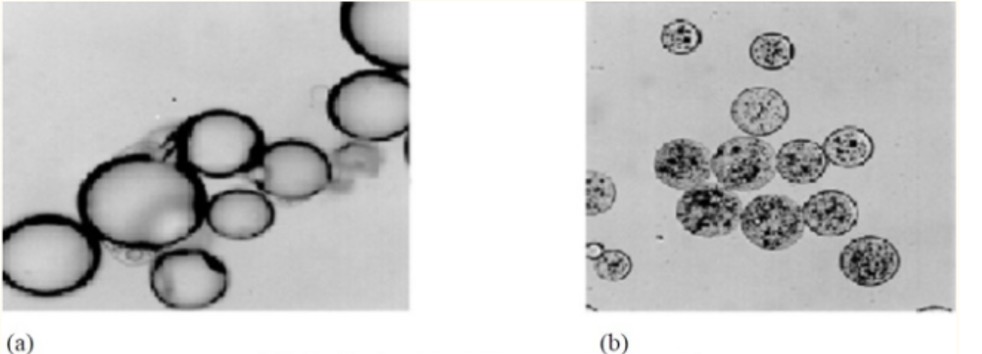
Figure 1: (a) Mononuclear microcapsules carrying solid material, (b) Aggregated microcapsules carrying liquid material2.
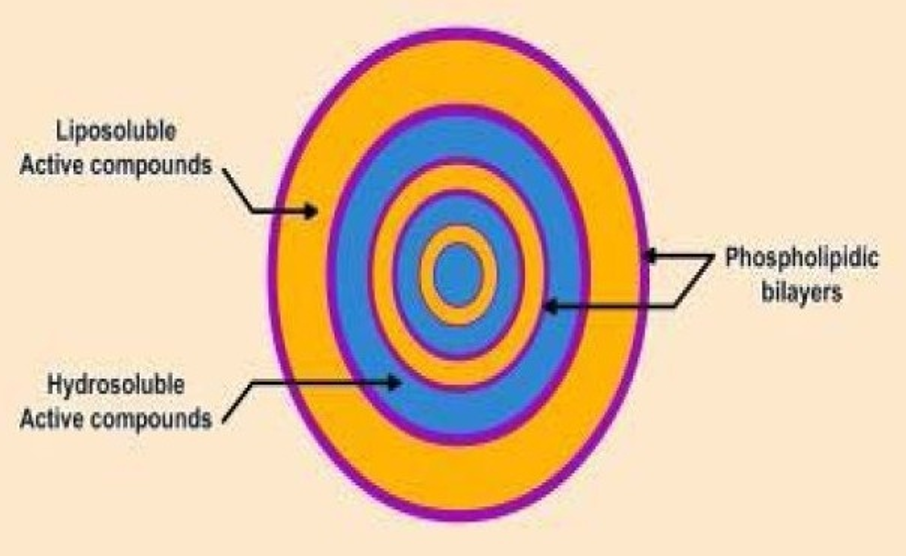
Figure 2: Schematic presentation of a microcapsule2.
Coating material must be adhesive to the core material in order to cover core material properly. Coating materials must work as an harmonious aid to core material in required strength, flexibility, impermeability, optical properties, and stability. Its release must be controllable under required conditions1.
Figure 3 : Coating material examples1
Water Soluble Materials
Water Insoluble Materials
Waxes and Lipid Materials
Gelatin
Calcium alginate
Paraffin
Gum Arabic
Polyethylene
Carnauba
Starch
Polyamide (Nylon)
Spermaceti
Polyvinylpyrrolidone
Silicones
Beeswax
Polyacrylic acid
Polymethacrylate
Stearic acid
Carboxymethyl-cellulose
Cellulose nitrate
Glyceryl stearates
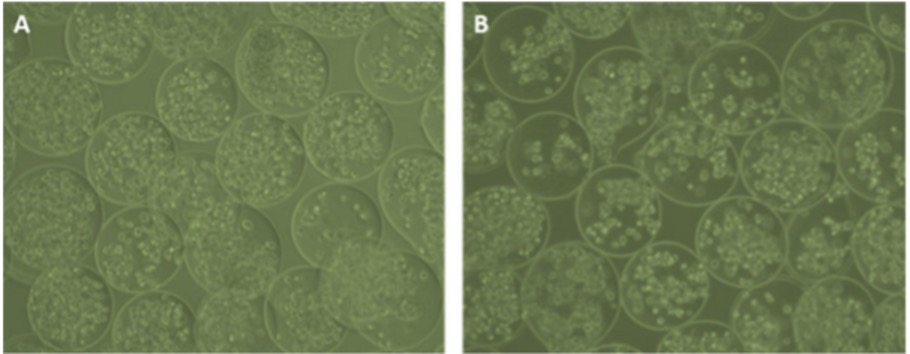
Figure 4 : Alginate coated adipose stem cells extracted from (A) rat and (B) human3.
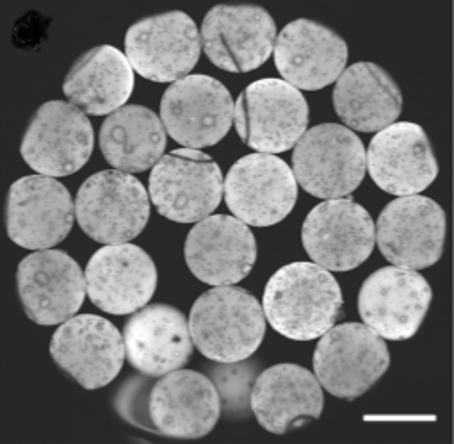
Figure 5 : Confocal laser scanning microscope image of rhodamine-labeled hydrogel microcapsules4.
Method
The microencapsulation of adipose stem cells coating with alginate is shown in figure 6. The cross- linking solution contains calcium chloride and glucose and is buffered with HEPES. Calcium chloride provides divalent cations to alginate during cross-linking. Glucose is useful for maintaining physiological osmolality of the cross-linking solution for the adipose stem cells. HEPES is used tomaintain pH at or below pH 7.33.
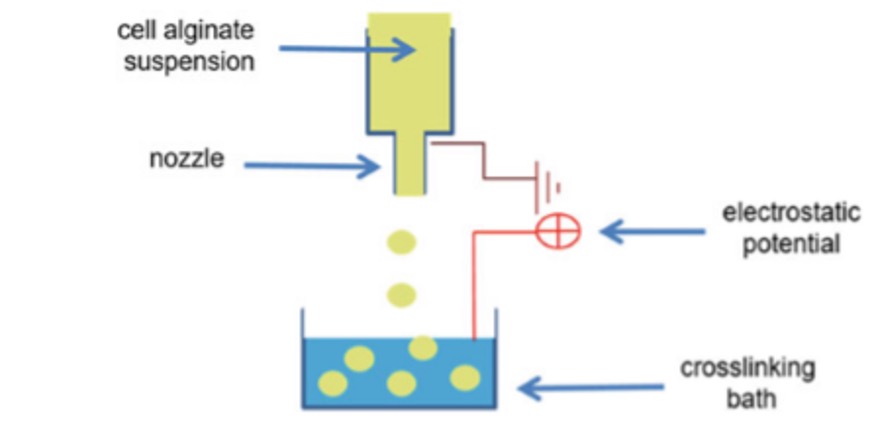
Figure 6: Schematic presentation of method used for microencapsulation of adipose stem cells3.
The generation of hydrogel microcapsules with a microfluidic system is shown in figure 7. Oligosaccharides and peptide–starPEG were inserted through two distinct channels. The flow rates of the oil phase and Oligosaccharides and peptide–starPEG have been set to get required droplet formation4.
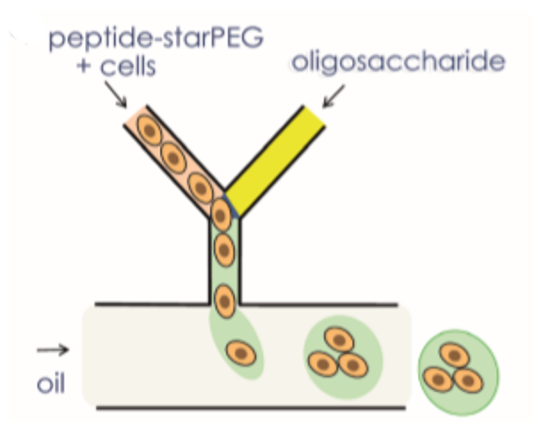
Figure 7 : Scheme of the microfluidic system used for hydrogel microcapsule generation4.
Conclusion
Microencapsulation can be used to encapsulate different materials therefore it is useful for treatment of different diseases that occurs in various tissues. There are various methods to make microcapsules. Microcapsule generation method must be chosen carefully according to the materials that microcapsule made out of. Microcapsules can be used to deliver drug molucules, various cell types into the targeted tissue. As technology improves, microencapsulation mehods will also improve and become more effective.
References
1. MICROENCAPSULATION. Int J Pharm Sci Rev Res. 2010;5(2):58-62.
2. M.N. Singh, K.S.Y. Hemant, M. Ram and HGS. Microencapsulation: A promising technique for controlled drug delivery. Res Pharm Sci. 2010;5(2):65-77.
3. Shirae K. Leslie , Ramsey C. Kinney , Zvi Schwartz and BDB, Abstract. Microencapsulation of Stem Cells for Therapy. In: Vol 1479. ; 2017:225-235. doi:10.1007/978-1-4939-6364-5
4. Wieduwild R, Krishnan S, Chwalek K, et al. Noncovalent Hydrogel Beads as Microcarriers for Cell Culture. Angew Chemie. 2015;127(13):4034-4038. doi:10.1002/ange.201411400